
Best Video Intercom & Access Control Systems: 2026 Buyer's Guide
Updated: June 12, 2026

Managing building access across enterprise facilities is increasingly challenging. High-traffic lobbies, multi-tenant floors, strict compliance requirements, and the need to integrate with existing IT infrastructure all raise the stakes for facilities managers. A poorly chosen or improperly deployed access control system for enterprises creates security gaps, audit failures, and operational overhead that ripple across your entire portfolio.
This guide highlights the best video intercom and access control systems to evaluate for commercial buildings in 2026.
At TruControls, we evaluate systems based on several real-world deployment considerations, including cloud management capabilities, SIP and VoIP interoperability, retrofit complexity, integration with existing IT infrastructure, credential management workflows, and scalability across multi-site portfolios.
Table of Contents
● Commercial Building Types and What They Need
● Signs It's Time to Upgrade Your Enterprise Access Control System
● Top Video Intercom Systems for Enterprise Buildings
● Final Verdict
● Why Enterprise Implementation Requires a Different Approach
● FAQs
Commercial Building Types and What They Need
Enterprise facilities span a wide range of building types, each with its own infrastructure constraints and operational demands. Understanding where your portfolio fits shapes every system and implementation decision.
Large commercial office towers house multiple corporate tenants across dozens of floors, with dedicated IT infrastructure and complex elevator and floor-access configurations. For finance and insurance firms, this often means prioritizing detailed access logs and role-based permissions aligned with internal security policies.
Multi-tenant commercial buildings require granular access control. Each tenant manages their own floor or suite, while building management oversees lobbies, loading docks, and shared amenities. Systems need to support multi-administrator configurations without compromising tenant isolation.
Financial and insurance sector facilities are subject to additional compliance obligations. Access control systems in these environments need to support audit trails, visitor logging, and integration with identity management systems. Legacy systems that cannot produce reliable access logs can create material compliance and operational risk, not just inconvenience.
Signs It's Time to Upgrade Your Enterprise Access Control System
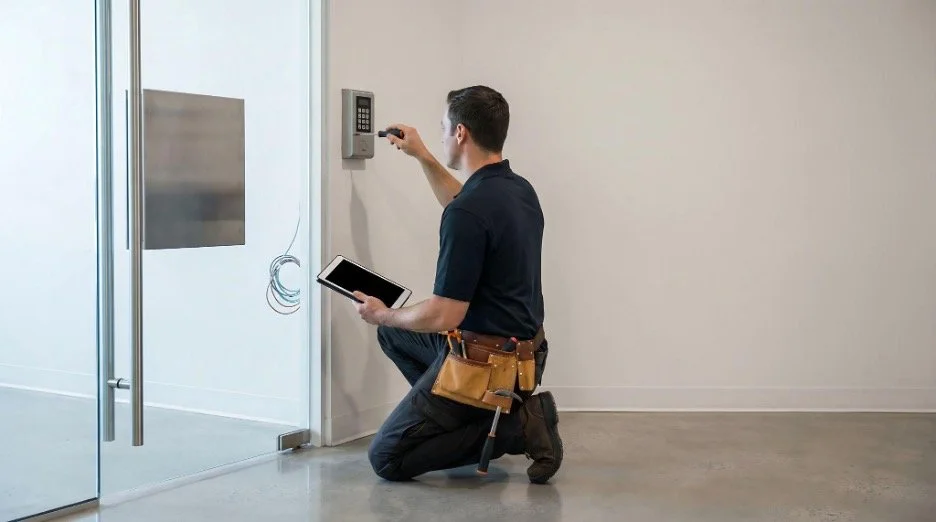
Not every facility needs a full system replacement, but there are clear indicators when continuing with a legacy setup poses more risk than upgrading. If your organization is experiencing more than one of the following, it is worth evaluating modern enterprise access control.
No Centralized Audit Trail
In regulated industries, the inability to produce a reliable log of who accessed which area and when is a compliance risk. Auditors will find this gap before you do.
Manual Credential Management Across Sites
If your IT or facilities team is manually provisioning and revoking access cards or fobs across multiple locations, you are absorbing unnecessary overhead and creating windows of risk when former employees or contractors retain access longer than they should.
No Integration with Identity Management Systems
Modern enterprise access control should connect to your existing directory services. If your physical access system operates in isolation from your HR and IT provisioning workflows, you are running two separate identity management processes that should be combined into a single process.
Inability to Scale Across Your Portfolio
Adding a new office location, floor, or access point should not require a separate system or a new vendor relationship. If your current platform cannot extend without significant rework, it will become a constraint as your organization grows.
Frequent Downtime or Recurring Maintenance Calls
Legacy systems that require regular on-site service visits or experience frequent, unexpected failures create operational disruptions and ongoing costs that often exceed the investment required for a modern replacement.
No Remote Management Capability
If your facilities team cannot manage access remotely or respond to after-hours incidents without sending someone on-site, the system creates operational gaps that modern platforms address as standard capabilities.
Top Video Intercom Systems for Enterprise Buildings
If you are evaluating video intercom and access control systems in 2026, you will likely encounter a mix of legacy manufacturers and newer cloud-based platforms. Each takes a different approach to access control, hardware design, and day-to-day management.
Below are three systems that consistently appear in enterprise building deployments, along with what sets each apart.
Swiftlane - Best Overall for Enterprise Deployments
Swiftlane is a modern, unified access control and video intercom platform built for organizations managing access across multiple buildings, floors, or locations. For enterprise IT and facilities teams, its core value is consolidating hardware, software, and access management into a single platform with centralized administration, thereby reducing the vendor complexity that typically accompanies large-scale deployments.
From a security and compliance standpoint, Swiftlane goes beyond basic intercom functionality. It supports facial recognition unlock, PIN-sharing detection, loitering alerts, and credential-sharing detection, capabilities that matter in environments where unauthorized access has real operational and regulatory consequences.
The hardware is IK10-rated for durability and performs reliably across high-traffic entry points, making it suitable for busy corporate lobbies, loading docks, and shared amenity floors.
On the access side, employees and contractors are not limited to a single credential method. They can use mobile credentials, PIN codes, key cards, fobs, or face unlock, while IT and facilities teams manage everything through a centralized cloud dashboard.
Role-based permissions allow access to be structured around departments, floors, and locations rather than managed individually.
Swiftlane also addresses the operational reliability requirements of enterprise environments:
Offline mode and cellular connectivity keep the system running during network outages
Real-time access logs and audit trails support compliance reporting across all entry points
PIN-sharing alerts and credential-sharing detection reduce unauthorized access risks across shared spaces
From an implementation perspective, Swiftlane simplifies what is often a fragmented vendor landscape. IT and facilities teams use a single platform for hardware, installation, and ongoing support, backed by a nationwide installer network and 24/7 support.
Best for: Enterprise organizations managing multiple entry points, locations, or buildings that need centralized control, compliance-ready audit logs, and minimal ongoing administrative overhead; not ideal for small or single-site deployments.
Aiphone - Best for Simplicity and Proven Reliability
Aiphone is a long-established intercom manufacturer with a strong track record in commercial buildings. Its systems are hardware-focused, straightforward to operate, and built around reliability over advanced feature sets.
For enterprise environments with limited IT resources or straightforward access requirements, Aiphone provides a dependable baseline. Its focus on audio and video communication makes it easy to deploy and maintain in low-complexity environments.
That said, Aiphone's limitations become more apparent at scale. Centralized cloud management, mobile credentials, and integration with identity platforms are either minimal or require additional third-party components. For organizations with multi-site footprints or compliance obligations in regulated industries, these gaps are significant.
Best for: Single-site deployments or buildings with straightforward access requirements that prioritize hardware reliability over centralized management and compliance capabilities.
2N - Best for Enterprise-Grade SIP & IP Integration
2N is a well-established enterprise intercom manufacturer known for its SIP-based IP intercom systems and deep integration capabilities with enterprise telephony, access control, and building management platforms. Its solutions are commonly deployed in commercial office buildings, campuses, and mixed-use enterprise environments where interoperability with existing infrastructure is a priority.
For organizations already operating VoIP or SIP-based communications systems, 2N offers a flexible architecture that integrates cleanly into broader enterprise IT ecosystems. The platform supports mobile credentials, video intercom functionality, and integrations with a wide range of third-party access control and automation platforms.
2N’s hardware is robust and designed for high-traffic commercial deployments, making it a strong fit for corporate lobbies, parking facilities, and perimeter access points.
However, compared to more modern cloud-native platforms, 2N often requires greater configuration complexity and reliance on third-party systems for centralized management, credential administration, and advanced analytics. Enterprise organizations without dedicated IT or integration resources may find ongoing management more involved than newer unified platforms.
Best for: Enterprise environments that prioritize SIP interoperability, integration flexibility, and compatibility with existing communications infrastructure.
Quick Comparison
| System | Best For | Key Strengths | Limitations |
|---|---|---|---|
| Swiftlane | Enterprise at scale | Centralized multi-site management, audit logs, role-based permissions, face unlock, offline + cellular support | Not suitable for single-tenant or small sites |
| Aiphone | Single-site deployments | Proven reliability, straightforward hardware | No centralized cloud management, limited compliance features, not scalable across multiple sites |
| 2N | SIP/IP enterprise integrations | Strong VoIP interoperability, enterprise-grade hardware, and broad third-party integrations | More complex deployment and administration, less unified cloud management |
Final Verdict
Each platform serves a different operational model. Swiftlane stands out for organizations prioritizing centralized cloud management and modern credential workflows, while 2N and Aiphone remain strong options for enterprise environments requiring SIP interoperability, proven hardware reliability, or simpler operational models.
Swiftlane is the strongest choice for enterprise organizations that need centralized multi-site management, compliance-ready audit trails, flexible credential options, and a platform that scales as their portfolio grows.
In every case, implementation quality determines whether the system delivers on its capabilities. The right integration partner ensures the deployment is aligned with your building's infrastructure, your IT architecture, and your organization's long-term access control strategy.
Why Enterprise Implementation Requires a Different Approach
Selecting the right system is only part of the equation. In enterprise environments, how a system is deployed determines whether it performs as intended and whether it creates or eliminates risk.
Every commercial building presents its own constraints: existing structured cabling, network architecture, number of entry points, compliance requirements, and occupancy patterns.
At TruControls, we bring an infrastructure-first methodology to every enterprise access control deployment.
A typical enterprise deployment with us includes:
Assessing existing structured cabling, network infrastructure, and entry points against the requirements of the target system
Identifying what can be reused, what requires upgrading, and where integration with existing IT and building management systems is needed
Designing the deployment in phases to minimize disruption to active operations
Configuring access permissions, audit logging, and credential management workflows to align with the organization's IT and compliance policies
Providing ongoing support and system optimization as the portfolio evolves
This approach reduces implementation risk, avoids unexpected costs, and ensures the system performs reliably from day one and continues to perform as the organization grows. Contact us today.
FAQs
Can we upgrade our building's access control without replacing all existing wiring and infrastructure?
In many cases, yes. TruControls assesses existing cabling, network readiness, and entry point configurations first, so you understand the full scope before committing to an upgrade path.
How does access control integrate with our existing IT infrastructure?
Modern platforms integrate with directory services and building management systems, allowing IT teams to manage physical and logical access through a single provisioning workflow. Integration depth depends on the platform and deployment configuration.
How do we know when it is time to replace our current system rather than continue maintaining it?
If repair calls are increasing, audit logs are unreliable, remote management isn't possible, or credentials are being maintained manually across locations, the cost of maintaining your current system likely exceeds the cost of replacing it.